



Designing a Blueprint for Global Human Connection
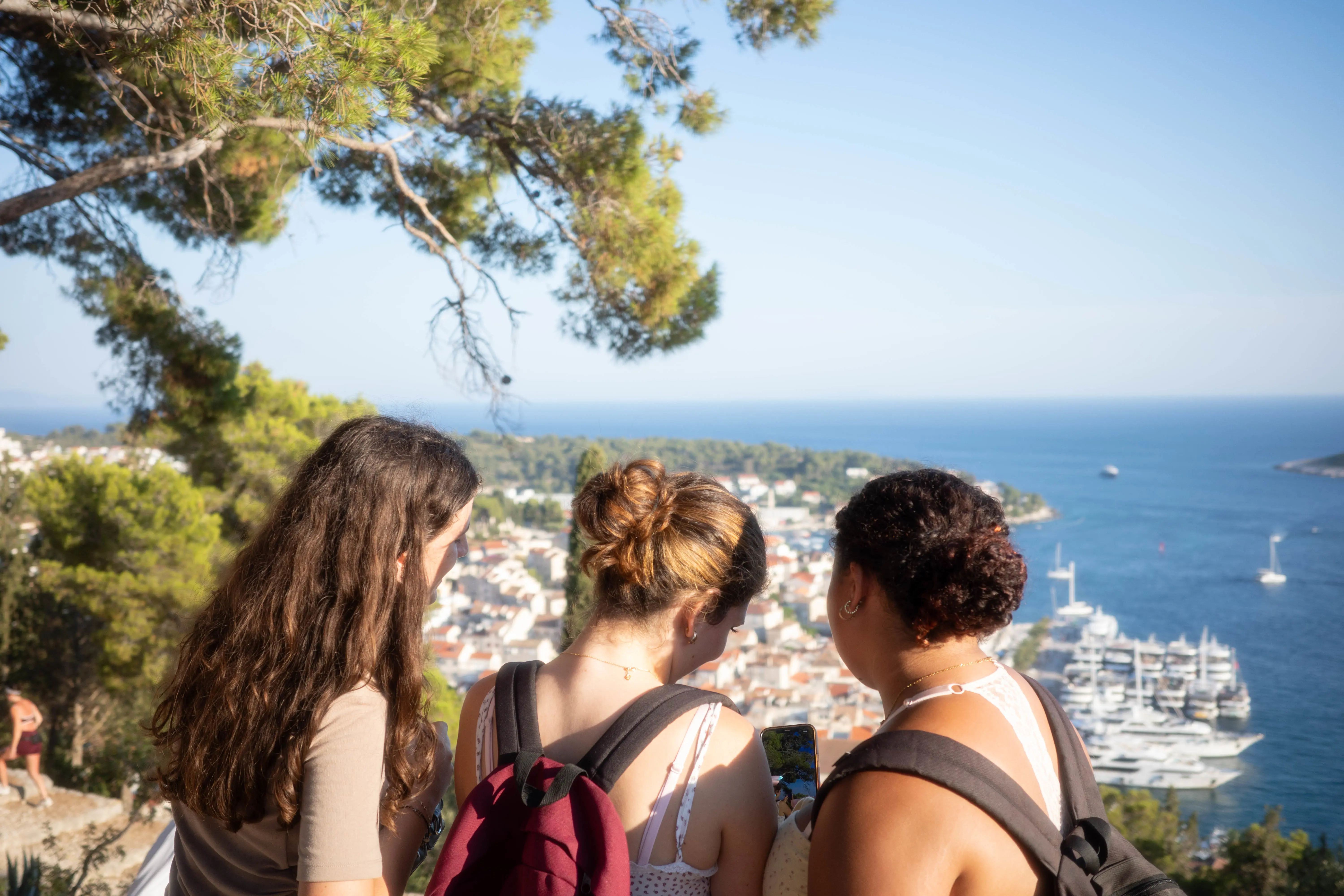
THIS SUMMER, FIVE CHADWICK UPPER SCHOOLERS VENTURED TO THE ISLAND OF HVAR, CROATIA — specifically the seaside village of Jelsa — for a two-week design challenge and leadership program with seven Croatian peers from the Split-based nonprofit Jedna Mladost (One Youth). In collaboration with the Field School of Hvar, the 12 students designed regenerative apparel, accessories and workshops that serve the needs of the Field School while reflecting the island’s culture and values.
MARLEY: I didn’t have any idea what Croatia was like because I’d never been here before and I didn’t know anybody from here. I just knew there was a sea.
MARITA: I think others assume that because we’re direct that all of us are rude. But we’re really not. Wherever you go, all you have to do is say “hi” and the person is excited to talk to you. Home to centuries-old olive groves, vineyards and the UNESCO-recognized Stari Grad Plain, Hvar’s history and tradition remain deeply connected to daily life. Yet the island also faces modern pressures, including seasonal tourism, the rise of mass-produced apparel and single-use plastics.
Rather than visiting as tourists, students focused on actively contributing to the island’s long-term ecological and cultural well-being in an effort to move beyond the passive consumption of a destination. Their work centered on two challenges. In the Zero Kilometer Design Challenge, students researched local craft traditions to prototype a sustainable school uniform, a backpack, an adventure kit and workshops for the Field School of Hvar. The second asked each student to develop a personal “Leadership Blueprint” reflecting their own values and purpose.
Through workshops, interviews and cultural excursions, students learned the design process, sewing, mending, customization and public speaking while exploring a regenerative approach to their thinking.
MARLEY: In the project where we built the perfect carryall bag for our partner, we spent time interviewing them, which was fun because we had to ask detailed questions about their life and create something specific.
MARITA: My favorite workshop was when we created mood boards because we had the freedom to express how we felt and what we were grateful for. It was colorful and messy, which is the best.
Visiting historic places like Hvar Town, the Fortica (Fortress) and Stari Grad, students spoke with residents and business owners, revealing both the pride people have in their island and the challenges they face. Many spoke about olive trees, lavender, vineyards and the sea as defining parts of Hvar’s identity. Others described the realities of a seasonal economy and the need for more sustainable infrastructure, including public water fountains to reduce reliance on single-use plastic bottles.
Those conversations directly shaped the students’ designs. Working through multiple rounds of feedback, teams created prototypes that balanced durability, functionality and sustainability while incorporating colors, materials and imagery inspired by Hvar. Every decision reflected the needs of the Field School, its families and its students.
MARITA: My favorite part of the process was when we designed our prototypes because we had to share our thoughts and combine them together. I also liked actually making the prototypes because I wasn’t expecting to do that. It was nice to do something with my hands.
The program concluded with student presentations to Field School staff, parents and community members. Students used storytelling to connect their experiences and findings to each design.
On the final night, students shared their own leadership journeys, reflecting on the past two weeks and confiding their hopes for the future. Themes of openness, staying true to oneself and a desire to positively impact the world emerged as they connected their trip experiences to changes they planned to make at home.
For Marley, the experience also reshaped her understanding of community.
MARLEY: One thing I’ll miss the most is the closeness to nature and how full our days are. In Los Angeles, you have to drive 30 minutes to go on a hike. Here, pine trees and the beach are just steps away. I’ll also miss how close everyone is. I can just go knock on your door.
MARITA: I see my friends every day because we’re right next to each other.
Perhaps the greatest lesson of leadership is allowing yourself to be changed by the people and places you encounter. By designing with — rather than simply for — the people of Hvar, these students left with more than prototypes. They returned home with new friendships, a deeper understanding of another culture and a clearer sense of the kind of leaders they hope to become.
Written for Compass Magazine by Tami Seeger. See the entire article here online, and visit the photo album from the Global Program here.