


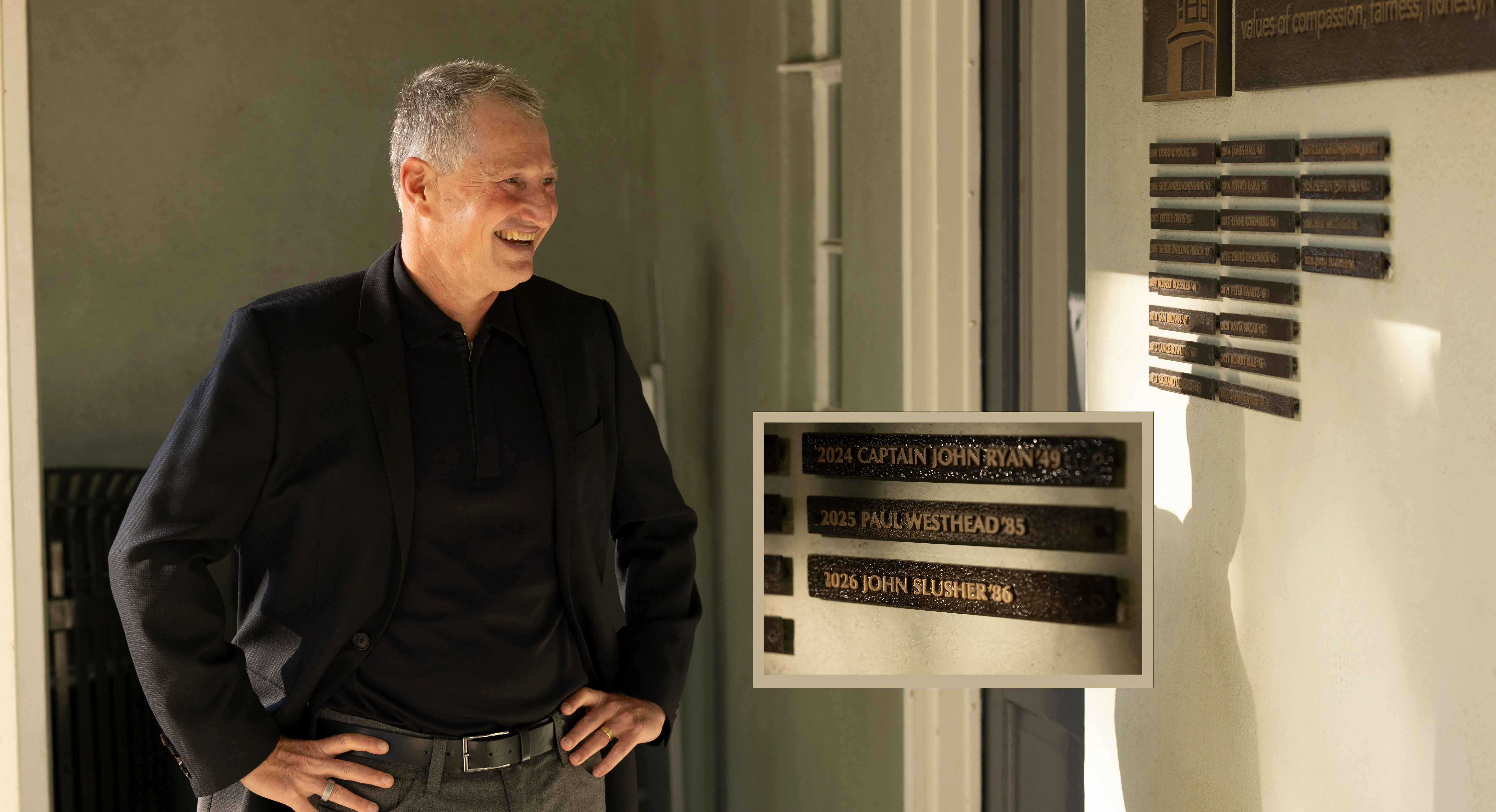
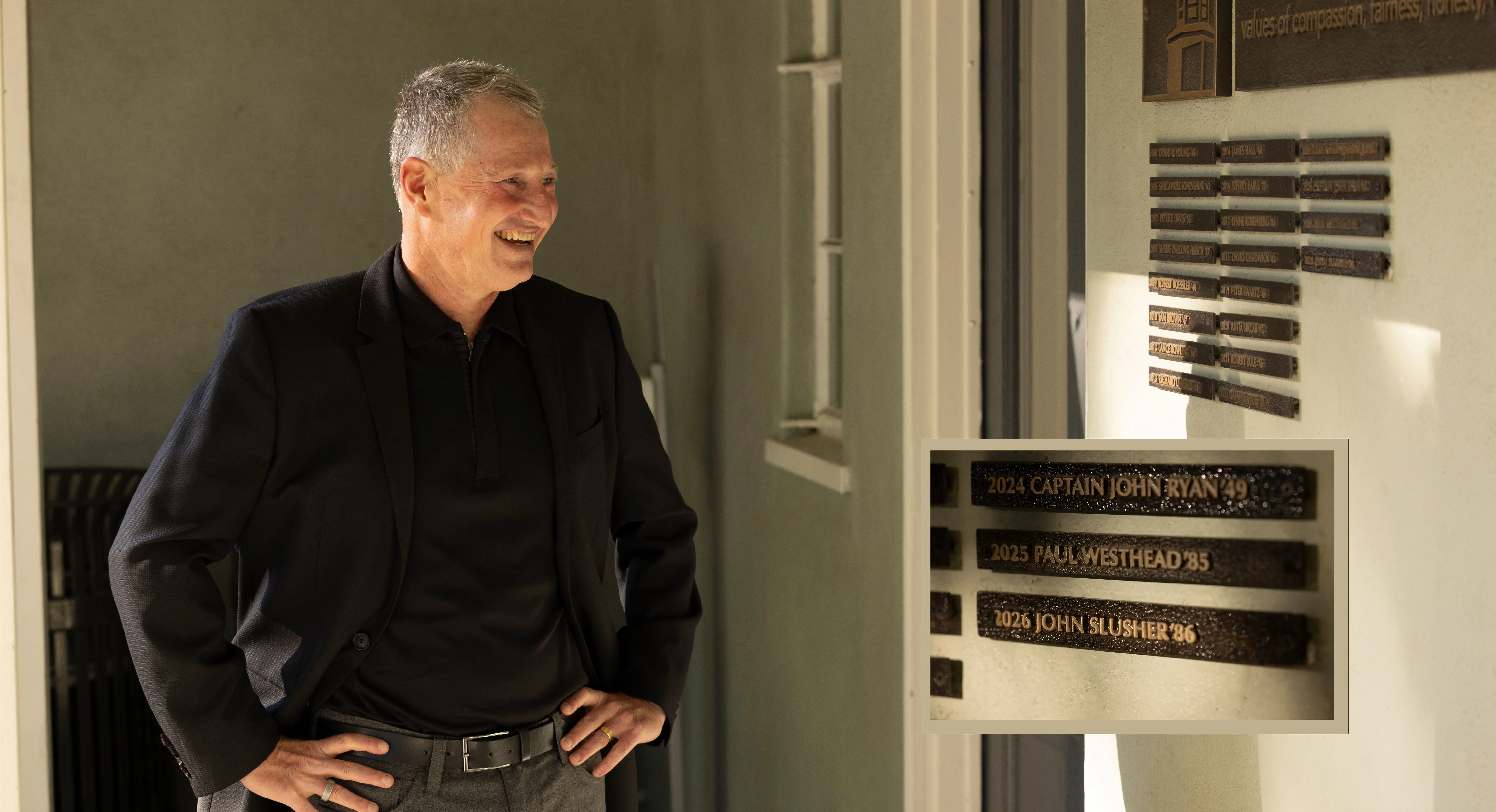
Get to Know John Slusher '86
The 2026 Chadwick Distinguished Alumnus carries the Olympic torch — from 1984 to 2028.
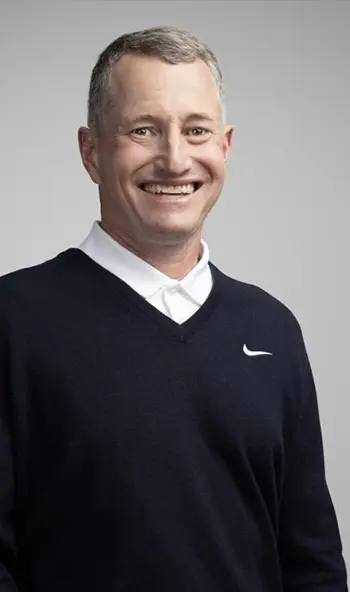
IN THE SUMMER OF 1984, JOHN SLUSHER CARRIED THE OLYMPIC TORCH. He was a Chadwick sophomore, and the Games had come to Los Angeles. His summer job that year was scalping tickets, which he is quick to point out was legal back then. He sold about 1,000. Four decades later, he runs the commercial side of the 2028 Los Angeles Olympic and Paralympic Games, and his team is trying to sell 12 million. “I carried the torch then,” he said, “and now I’m selling the torch in 50 states.”
Sports were in Slusher’s blood. His father, Howard Slusher, represented athletes before becoming a key adviser and legal consultant to Nike and its co-founder, Phil Knight, a role he held for nearly four decades. John grew up tagging along to games and meetings. “I was always a sports kid,” he said.
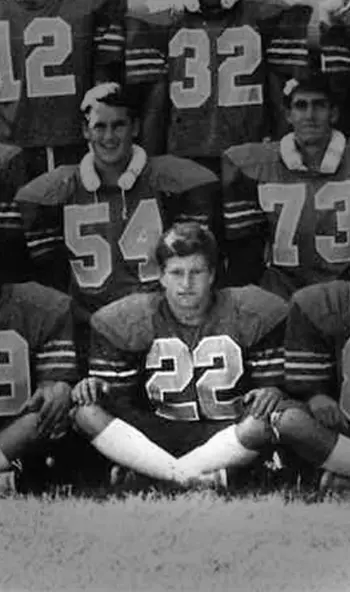
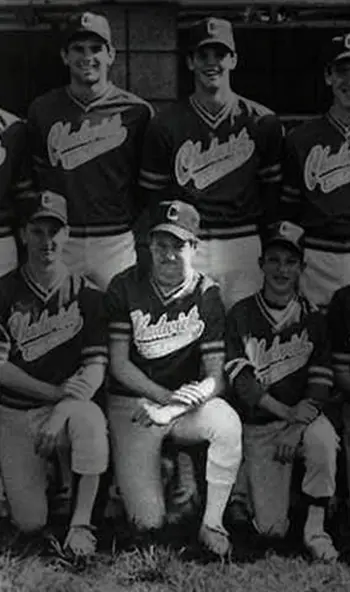
His family moved to the Rolling Hills area just before high school, and he entered Chadwick as a freshman, all of 4 feet 11 inches and 90 pounds. Playing football was “a little bit of a struggle,” he said. He’d never played the sport before high school. By his senior season, he was a workhorse on both sides of the ball. In a 1985 game against Pasadena Poly, he ran 30 times for 150 yards and led the team in tackles from linebacker, and the Los Angeles Times called him the team’s best player. He didn’t stop there. He also played basketball, soccer and baseball, and ran some track — five or six sports in all. “The great thing about Chadwick was you were encouraged to do whatever you want to do, whether you’re good or bad,” he said. “You have that opportunity to try things.”
Ask him who shaped him, and the names come from both the locker room and the classroom. Hobby Coale ’68 and Jim Drennen coached him and stayed close. So did Sid Grant. In the classroom, there were science teacher Jim Spalding, English teacher Karen Stephens and a young history teacher the students called “Wieds,” better known now as Mark Wiedenmann, a Chadwick legend who led the upper school for many years. “When I was there, he was a young, hip, cool history teacher,” Slusher said.
The football and the academics together, he said, got him into college. He traces a straight line from that foundation to everything after. Football followed him east to Dartmouth, where he played fullback, then back home for law school at the University of Southern California. He met his wife, Christine, there, and the two recently marked their 30th anniversary. After law school, he clerked for a judge, then practiced corporate law at O’Melveny & Myers. In 1998, he joined Nike, the company his father had long advised, and the pieces of his life came together: the sports kid, the fullback, the agent’s son, all of it now his career. He figures he was, in some ways, destined for the business, though he didn’t plan it that way. He stayed at Nike for almost 27 years, 17 of them running the company’s global sports marketing under Chairman and CEO Mark Parker.
Along the way, he met many of the greatest athletes alive. He tells a story about Kobe Bryant, who cornered him at an event in Brazil and spent four hours grilling him on how to run a business. It showed him that Bryant was bringing “the dedication, work ethic and competitiveness that he has for basketball” to his new business.
He never planned to leave Nike. Then he burned out. “I love the company so much that I didn’t want to work there when I wasn’t loving it anymore,” he said. He was ready to simply stop working. He bounced the decision off a few friends in the industry, and one of them, Casey Wasserman, chair of LA28, told him he had the perfect job. Two months later, Slusher signed a contract.
After three days off, he took on the Games with the same work ethic he had admired in Bryant. The role is unlike any he has held, and it has an end date. “Right now we have a one-year-and-10-month plan,” he said, “and next month it’s one year and nine months, and that’s all that really matters.” His team’s revenue target is the biggest in the history of the Games, and ticket sales and sponsorship revenue have broken records. Slusher said his team sold more than 6 million seats in the first six weeks, more than two years out, at full price.
For all the scale of the Games, the moments he holds closest are small. He talks about watching parents cry in the stands at their daughter’s curling match during the Milan Cortina Games. He thinks about a new Olympian taking it all in for the first time, or a high school student carrying the torch through Los Angeles, the way he did more than 40 years ago. “When you have that emotional connection and you care, that’s the beauty of sport,” he said. Those are the moments he’s excited for everyone to experience in 2028.
He doesn’t carry himself like a man helping run the biggest sporting event in history. He calls his career “nothing special.” He was never a superstar, he says, and rarely thought more than a year ahead. His favorite sports moments came from coaching his kids over 25 seasons and watching them play soccer, lacrosse and football, compete in taekwondo and train for marathons. But nothing about the job seems too big for him: the record revenue, the millions of tickets, the eyes of the world.
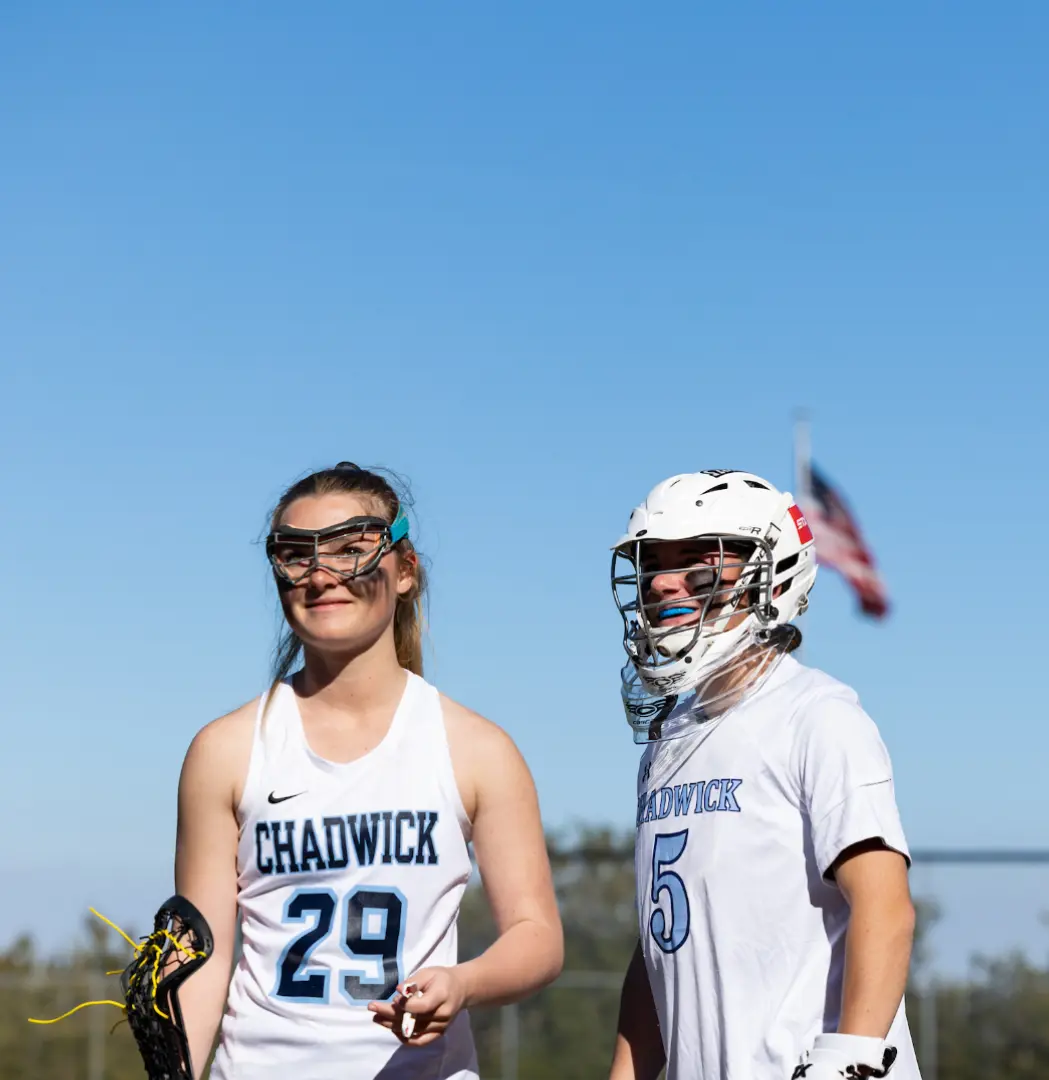
That steadiness traces straight back to Chadwick, the small school that showed a 90-pound freshman he could try anything and grow into it, and that shaped him more than he realized. This fall, it names him its Distinguished Alumnus, with the friends who knew him then in the room. He was built for this.
Click here to learn more about John's work with the 2028 Olympic Games.
Click here to see photographic highlights of the Alumni Awards Ceremony.
Return to Life on the Hill